


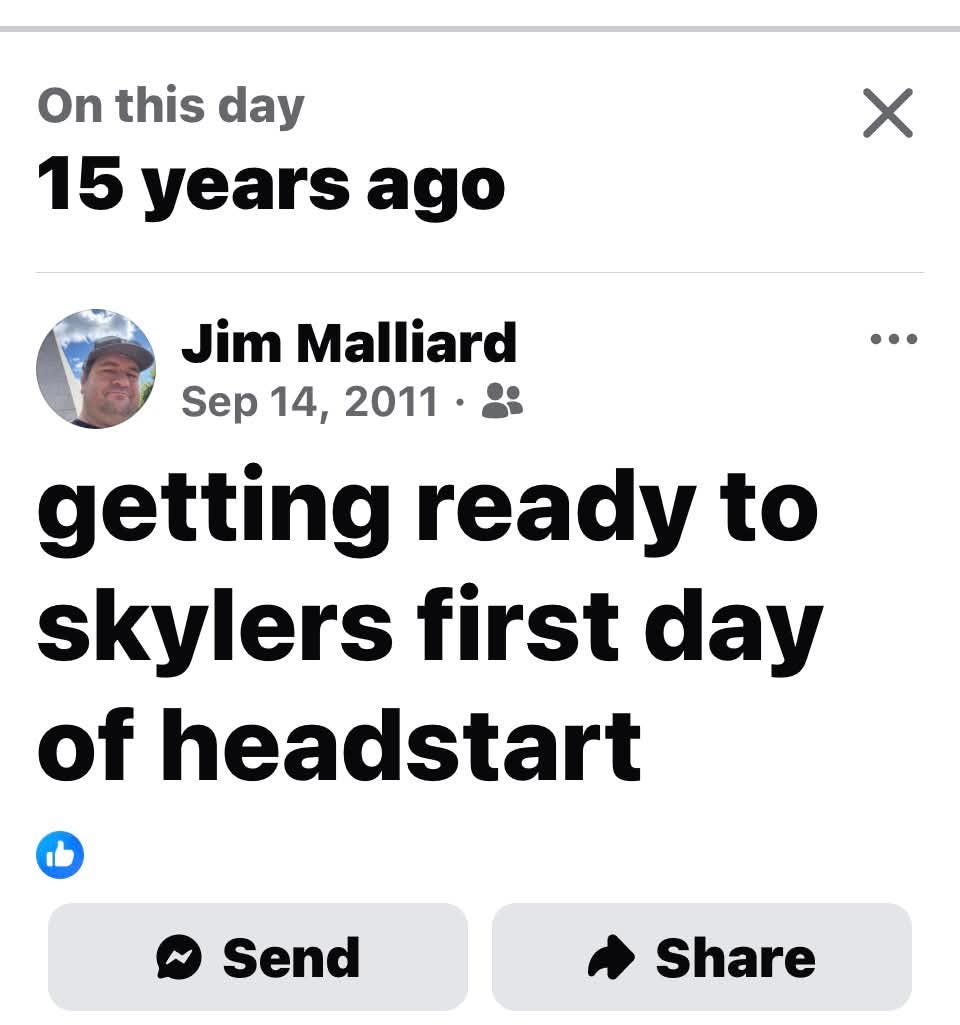
Fifteen years ago today, I made one of those simple Facebook posts that probably didn’t seem important at the time:
“getting ready to skylers first day of headstart”
That was it.
No big speech. No profound thoughts about education. Just a dad getting his kid ready for his first day.
Looking at that memory 15 years later, though, I’m reminded just how dramatically life can change around the first day of school.
One week you’re living your summer routine. Bedtimes are different. Mornings are different. Meals are different. Maybe you’ve been traveling, staying up late, sleeping in, or just enjoying not having somewhere you absolutely have to be at 7:30 in the morning.
Then school starts.
Suddenly there are alarms, assignments, teachers, buses, logins, activities, lunches, appointments, practices and a hundred other things competing for everyone’s attention.
And sometimes it’s bumpy.
That’s okay.
We put so much pressure on our kids—and ourselves—to have everything figured out on Day One. The perfect morning routine. The perfect schedule. The perfect attitude.
Real families don’t always work that way.
Maybe your child is exhausted after the first week. Maybe mornings have been a battle. Maybe you’ve already forgotten something. Maybe the schedule you thought was going to work absolutely doesn’t. Maybe your teenager is overwhelmed. Maybe your child loves their new teacher but is struggling with the workload.
Or maybe you’re questioning whether the educational environment your child is in is still the right one.
Give it a little time.
Most families eventually find their rhythm. What feels chaotic during the first couple weeks becomes normal. Kids adjust. Parents adjust. Teachers learn their students. Families figure out what works and what doesn’t.
But there’s an important difference between giving something time and ignoring a problem.
If something doesn’t feel right, pay attention.
Talk to your child.
Ask questions that require more than “fine” as an answer. Talk to the teacher. Read the emails from school. Look at the assignments. Attend the meeting. Learn what’s happening instead of waiting until a small problem becomes a big one.
That’s parent engagement.
It doesn’t require knowing every education law or spending your days following Harrisburg.
It starts with knowing your own child.
And if something needs to change, speak up.
Fifteen years ago, I was getting Skyler ready for his first day of Head Start. I couldn’t possibly have known where our family’s educational journey would eventually take us.
That’s probably true for a lot of parents reading this today.
You don’t know what the next 15 years will bring.
But you can be there today.
Give the new school year time to settle. Give your kids some grace. Give yourself some grace.
And while everything settles into place, stay involved.
Because nobody will ever know your child quite like you do.
Show up. Speak up. Pay attention. Participate.
That’s where parent advocacy begins.