


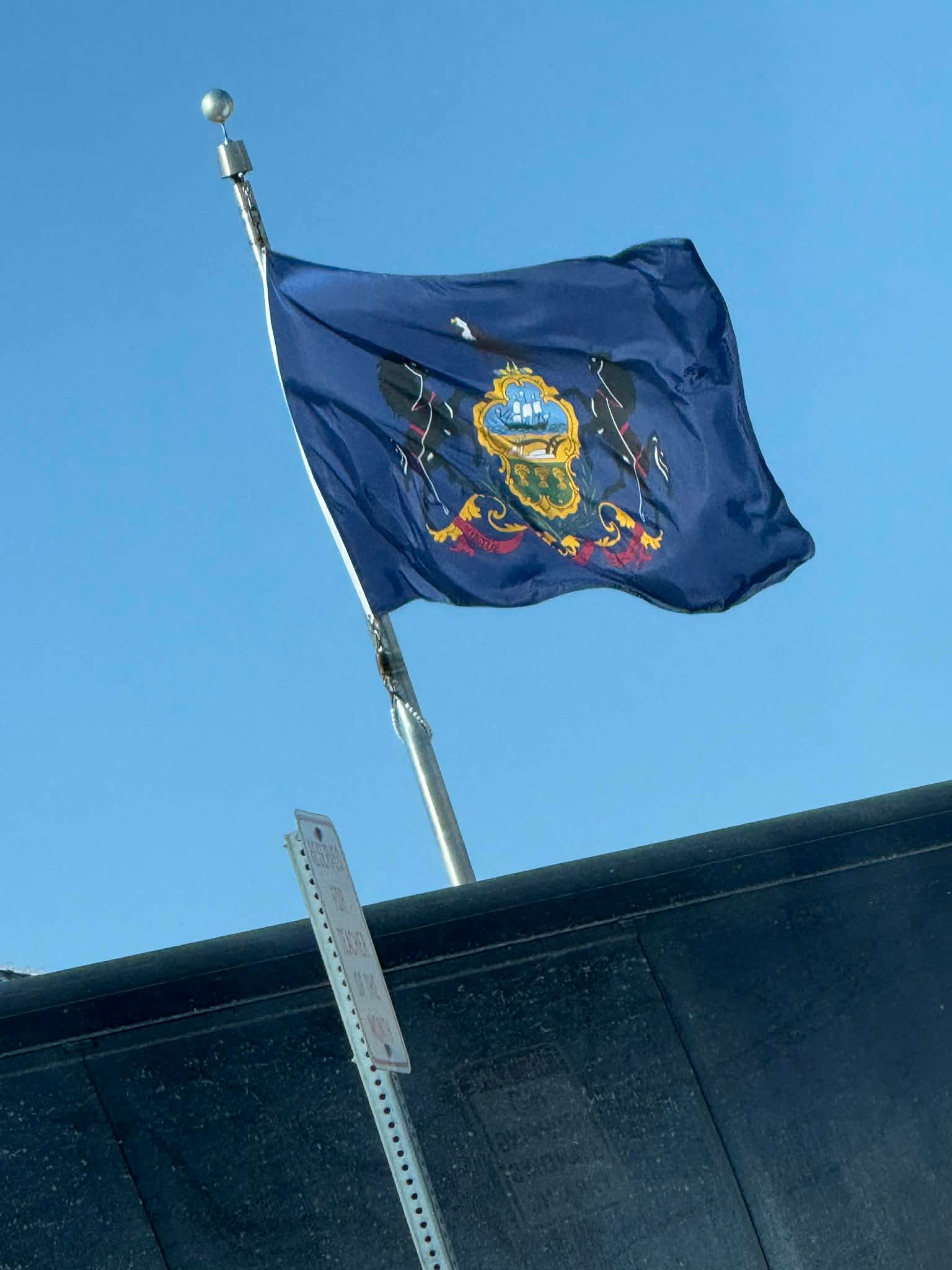
Welcome back to Harrisburg & Headlines, a series where I share the news stories, legislative proposals, education updates, and policy discussions that caught my attention throughout the week.
Every day, dozens of headlines compete for our attention. Some dominate social media, while others quietly move through Harrisburg or local communities without much notice. Many of those lesser-known stories can have a real impact on Pennsylvania students, parents, taxpayers, educators, and families.
My goal isn’t to tell you what to think.
It’s to help you stay informed.
Each edition features a collection of stories that stood out to me, along with a brief summary explaining why they matter and a direct link to the original reporting or legislative memo. I encourage you to read the source material yourself, ask questions, and form your own opinions.
📰 This Week’s Headlines
Rural Schools Continue to Face Technology Challenges
A new report highlights how many rural Pennsylvania school districts continue to struggle with aging technology, limited broadband access, and funding challenges. As more learning, testing, homework, and communication move online, unequal access to technology remains a concern for students and educators alike.
Read the full story:
https://whyy.org/articles/pennsylvania-rural-school-technology-funding-students/
No Criminal Charges Following Quakertown Protest
The Bucks County District Attorney announced that no criminal charges will be filed following the highly publicized Quakertown student protest. While the criminal investigation has concluded, the case continues to raise broader questions about student protests, school policies, and how districts respond to controversial events.
Read the full story:
https://6abc.com/post/no-charges-related-quakertown-protest-district-attorney-announces/19620842/
Trial Begins in Alleged Abuse of Autistic Students
The criminal trial involving former Greensburg Salem teacher aides accused of abusing autistic students is now underway. The outcome of this case will be closely watched by parents, educators, and disability advocates across Pennsylvania because it touches on student safety, accountability, and the care of some of our most vulnerable learners.
Read the full story:
https://triblive.com/local/westmoreland/trial-set-to-begin-for-greensburg-salem-teacher-aides-accused-of-abusing-autistic-students/
Harrisburg
One of my favorite things to follow isn’t just the bills that get introduced—it’s the co-sponsorship memos.
These memos are essentially an early preview of legislation. They allow lawmakers to gather support before a bill is formally introduced, giving citizens an opportunity to see what’s being discussed before committee votes and floor action begin.
Senate Memo #49041 — Modernizing Pennsylvania’s Civics Education
Sen. Lynda Schlegel Culver is proposing a statewide update to Pennsylvania’s civics education requirements. The proposal would replace locally developed civics exams with a single statewide assessment for students in grades 9–12 while also updating the Commonwealth’s civics standards for the first time in more than two decades.
The memo also proposes recognizing schools and educators who excel at teaching civics, with the goal of encouraging stronger civic knowledge and engagement among Pennsylvania students.
Read the memo:
https://www.palegis.us/senate/co-sponsorship/memo?memoID=49041
Senate Memo #48931 — Limiting Screen Time for K–2 Students
Sen. Lisa Boscola is proposing legislation to place reasonable limits on classroom screen time for Pennsylvania’s youngest public school students. The proposal would prohibit kindergarten through second-grade students from taking school-issued devices home and discourage schools from relying on daily one-to-one device use as a substitute for hands-on instruction, while still allowing technology to be used for computer science and other appropriate educational activities.
The memo points to declining English Language Arts (ELA) proficiency scores, along with research suggesting that handwriting, direct instruction, and face-to-face learning play an important role in early childhood development. It also cites studies linking excessive or poorly supervised screen time to weaker language, cognitive, and fine motor development. The proposal is intended to restore a healthier balance between technology and traditional classroom learning while continuing to use digital tools where they genuinely enhance education.
Read the memo:
https://www.palegis.us/senate/co-sponsorship/memo?memoID=48931
House Memo #48895 — Restarting PlanCon 2.0
Rep. Jacklyn Rusnock proposes restarting Pennsylvania’s school construction reimbursement program through what is being called PlanCon 2.0. The proposal is designed to help districts renovate aging buildings, improve school facilities, and complete construction projects while reducing pressure on local property taxpayers.
Pennsylvania’s original PlanCon program has largely been dormant since 2016, leaving many districts struggling to fund major capital improvements on their own.
Read the memo:
https://www.palegis.us/house/co-sponsorship/memo?memoID=48895
House Memo #48885 — Holding Harrisburg Accountable
Rep. Natalie Mihalek is proposing legislation aimed at increasing accountability for Pennsylvania’s chronic pattern of missing the June 30 budget deadline. Late state budgets create uncertainty for schools, local governments, nonprofit organizations, and families waiting to see how state funding decisions will affect them.
The proposal is intended to encourage lawmakers to complete the budget process on time rather than allowing negotiations to drag on for weeks or even months.
Read the memo:
https://www.palegis.us/house/co-sponsorship/memo?memoID=48885
House Memo #48877 — Expanding Access to Nonprofit Security Grants
This proposal would eliminate the matching-fund requirement for certain nonprofit security grants, making the program more accessible to smaller organizations with limited financial resources. Churches, synagogues, community organizations, and nonprofits could find it easier to apply for funding to improve security measures without first raising local matching dollars.
The proposal comes as many nonprofit organizations continue to evaluate security needs in response to recent acts of violence and attempted attacks across the country.
Read the memo:
https://www.palegis.us/house/co-sponsorship/memo?memoID=48877
House Memo #49056
Modernizing the Definition of “Professional Employe”
This proposal would update Pennsylvania’s Public School Code by expanding the definition of a “professional employe,” a term that has remained largely unchanged since 1971. The sponsors argue that today’s schools rely on many licensed and certified professionals who provide essential services to students but are not currently guaranteed the same statutory rights and protections as other professional employees.
If enacted, the legislation would extend “professional employe” status to additional school-based professionals such as school social workers, occupational therapists, physical therapists, behavior analysts, orientation and mobility specialists, speech-language pathologists, school psychologists, instructional technology specialists, and licensed professional counselors, while specifically excluding administrative personnel. Supporters say the change would better reflect the modern school workforce, help schools recruit and retain qualified professionals, and provide consistent legal protections such as transfer rights, sabbatical eligibility, and other benefits already extended voluntarily by many districts.
Read the memo:
https://www.palegis.us/house/co-sponsorship/memo?memoID=49056
House Memo #48854 — Supporting Students Experiencing Homelessness
Representatives Ismail Smith-Wade-El, Gina Curry, and Lindsay Powell are proposing the creation of the Homeless Education AWARDS (Assisting with Academic Resources for Displaced Students) grant program. The legislation would provide multi-year grants to schools and community organizations to help students experiencing homelessness receive the academic support, stability, and resources they need to remain engaged in school and improve their chances of graduating.
According to the Pennsylvania Department of Education, more than 50,000 Pennsylvania students experienced homelessness during the 2023–24 school year. The sponsors argue that homelessness creates significant barriers to attendance, academic success, and graduation, and note that students who do not finish high school are more likely to face unemployment, lower lifetime earnings, and homelessness as adults. The proposal seeks to invest in early intervention and support services to help break that cycle.
Read the memo:
https://www.palegis.us/house/co-sponsorship/memo?memoID=48854
Jim this is really helpful to me . Thank you for posting your citations as well as most dont even bother including AI Thank you so much .