


I’ve got a soft spot for this one.
I was a varsity golfer. I remember the quiet of a course more than the noise of a gym. I remember leaving school early, clubs in the trunk, chasing daylight. No crowd. No spotlight. Just you, the swing, and a chance to get a little better.
That mattered.
It still does.
Which is why this feels… off.
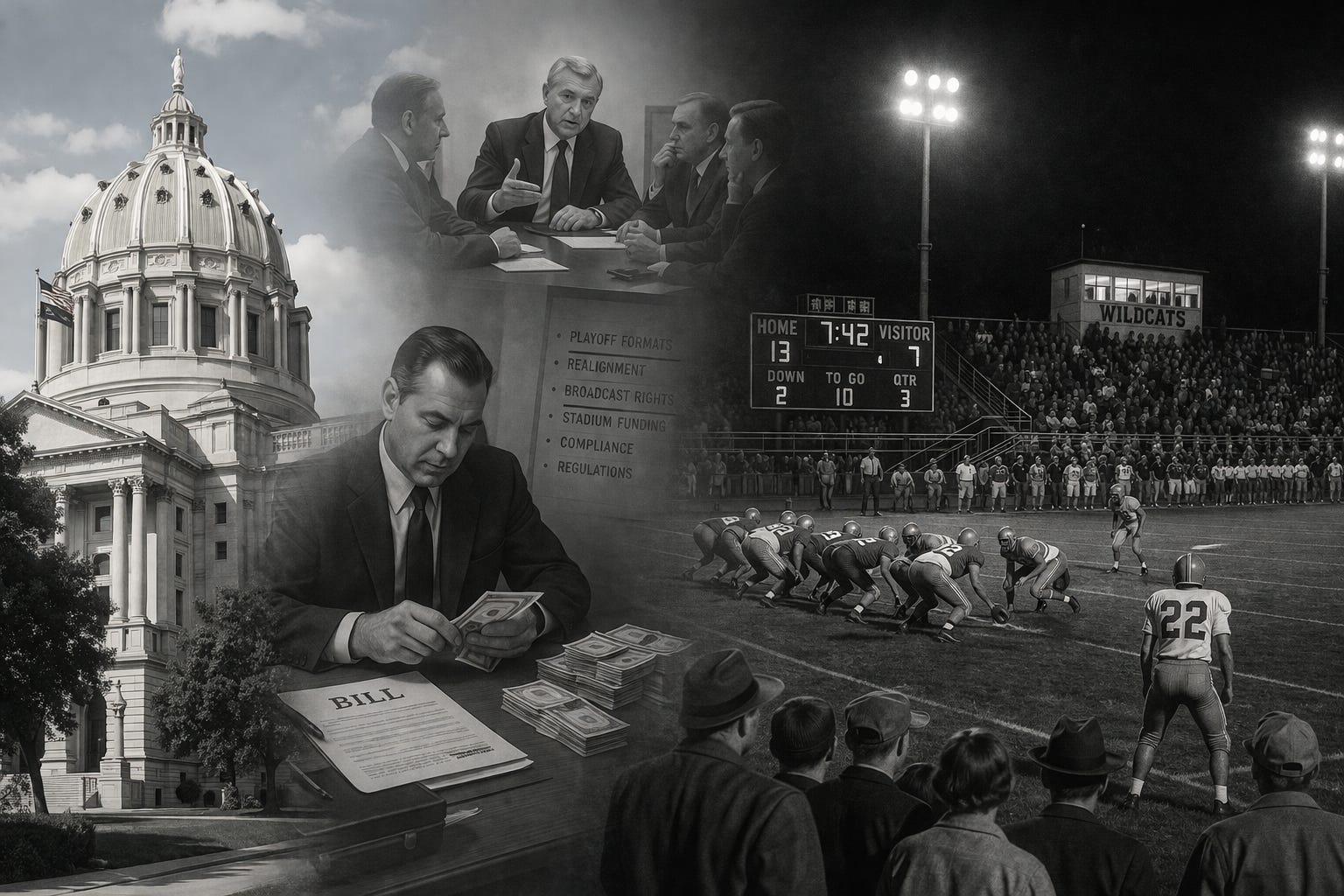
Because now I’m watching conversations at the state level—lawmakers debating playoff formats, regulations tightening, decisions being made in rooms far away from locker rooms—and I can’t shake the question:
Why is the state this deep in high school sports?
I get the argument.
Sports create opportunity.
They build discipline.
They give kids a reason to show up, belong, and push themselves.
That part is real. I’ve lived it.
But somewhere along the way, we didn’t just support sports—we built an industry around them.
And that’s where it starts to lose me.
We’ve got million-dollar stadiums for teenagers.
We’ve got turf fields replacing grass—not because it’s better for kids, but because it’s easier to maintain and monetize.
We’ve got broadcast deals and paywalls to watch your own local team play on a Friday night.
And now… we’ve got lawmakers spending time debating playoff structures.
Let that sink in.
In a world where families are fighting for educational stability, where budgets are tight, where real issues are stacking up…
We’re debating playoff formats.
This isn’t anti-sports.
This is pro-common sense.
There’s a difference.
Because when I think back to those golf matches, there wasn’t a dollar attached to it. No branding strategy. No revenue model. Just a school giving kids a chance to compete.
That’s the point, right?
Student athlete.
Not athlete first. Not content creator. Not revenue generator.
Student.
And the broadcast piece? That one really sticks.
Why can’t local schools stream their own games freely?
Why does a parent have to hit a paywall to watch their kid play?
We talk about community, but then we lock it behind subscriptions.
That doesn’t feel like access.
That feels like extraction.
I’m not naive.
I know sports cost money. I know facilities need upkeep. I know organization matters.
But there’s a line between supporting something and overengineering it.
And I think we crossed it.
Quietly.
Maybe the better question isn’t “How do we regulate high school sports better?”
Maybe it’s:
“Why are we regulating them at this level in the first place?”
What happened to local control?
What happened to communities deciding what works for their kids?
What happened to keeping the focus on participation, not production?
Because if we’re being honest…
This isn’t just about sports.
It’s about how easily we let good things turn into systems.
And once something becomes a system, it attracts money, rules, influence—and suddenly the original purpose starts to fade.
I still love the game.
Always will.
But I don’t love what it’s becoming.
And I think a lot of parents, a lot of former players, a lot of people watching from the outside are starting to feel the same tension:
We want kids to play.
We just don’t want them turned into products.
So maybe it’s time to pull this back a little.
Let schools be schools.
Let communities lead.
Let kids compete without being part of a bigger machine.
Keep the lights on Friday nights.
Just don’t let them blind us to what really matters.